

Kettle's Yard
The Louvre of the Pebble

One of my favorite types of places is a house museum. House museums— when a house is turned into a museum— usually recognize the people or person who lived there, and/or commemorate something about the time it was occupied. These smaller, often more independent museums reveal things about historical life that a regular museum might overlook, and are important illustrators of social history.
Last week, I visited the United Kingdom, where my brother lives. Luckily for me, the UK is chock full of house museums, as evidenced by this book I bought in the gift shop of one of them in London. While we visited several homes of famous artists and architects, the best one we went to was Kettle’s Yard in Cambridge, about an hour outside London.
My brother insisted my family had to go to Kettle’s Yard. I did not understand what that name meant, or recognize it as a museum— house or otherwise— until we got there. Kettle’s Yard is the former home of Jim and Helen Ede, now in use as a museum with an attached art gallery. Jim Ede, born in 1895, was a curator, collector of avant-garde art, and friend to artists. He worked at the Tate Gallery starting in the 1920s and moved to the house in Cambridge in 1957. Ede combined three adjoining houses into one home, and filled the house with the art he collected from his friends and artists he met around the world. This art collection, which includes now-famous artists like Joan Miro and Constantin Brâncuși, serves as the centerpiece of the museum— though it very much remains a house as well.
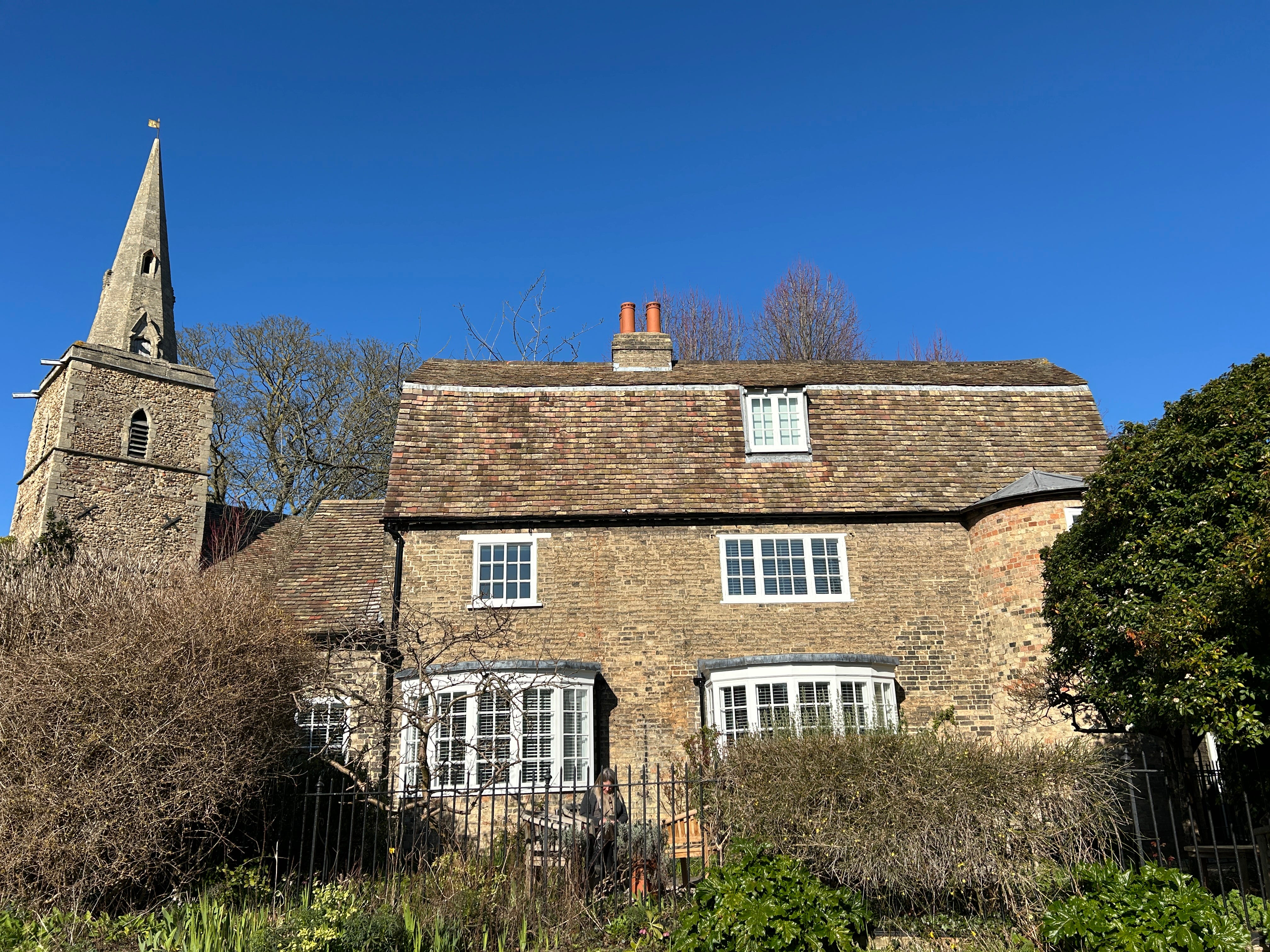
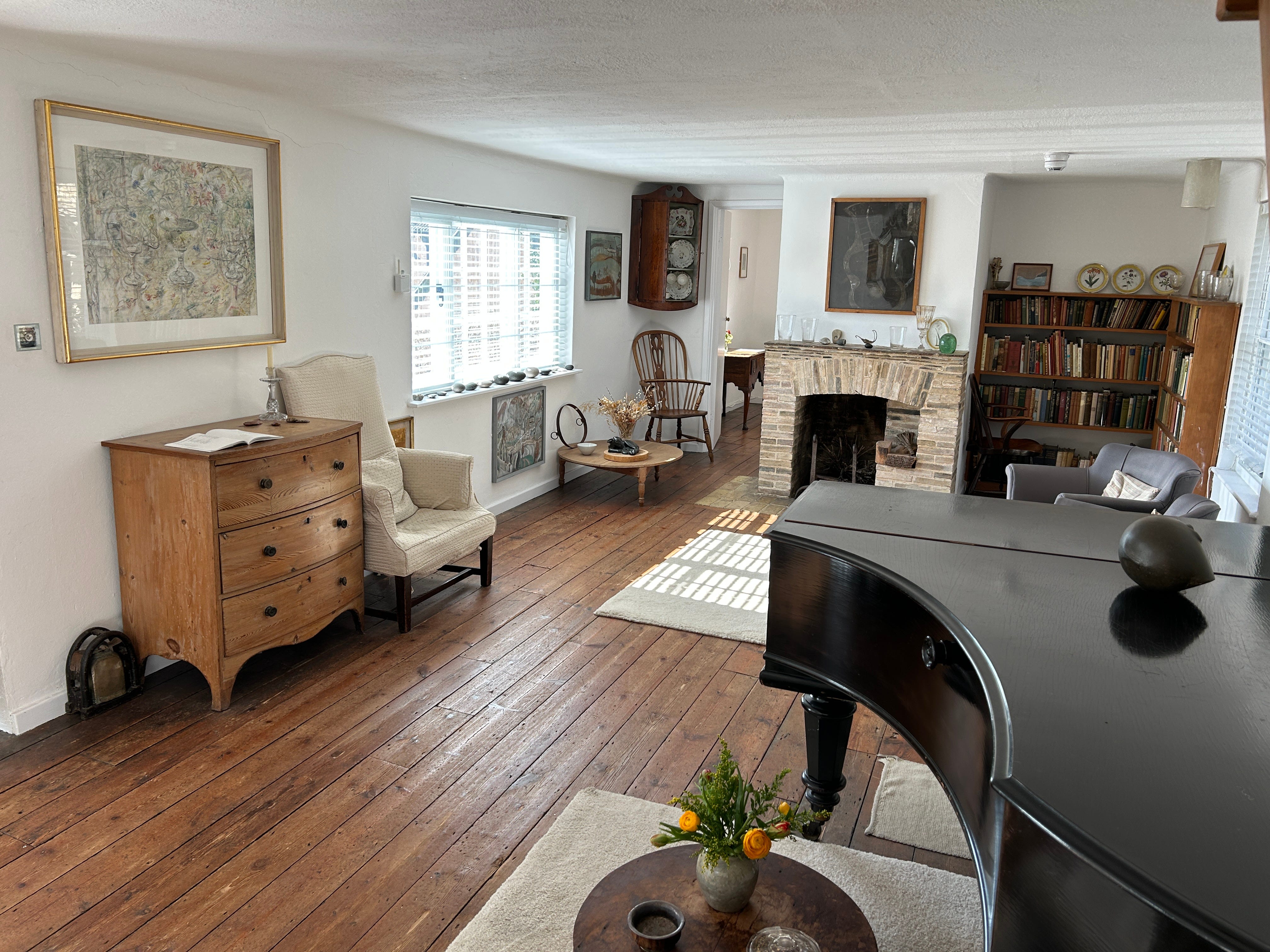
The house is preserved exactly the way Jim and Helen left it in 1973. The Edes held an “open house” every afternoon, inviting students and friends to come visit and view their art collection. Visitors today begin their journey by ringing the bell by the front door, answered by a gallery attendant welcoming you in.
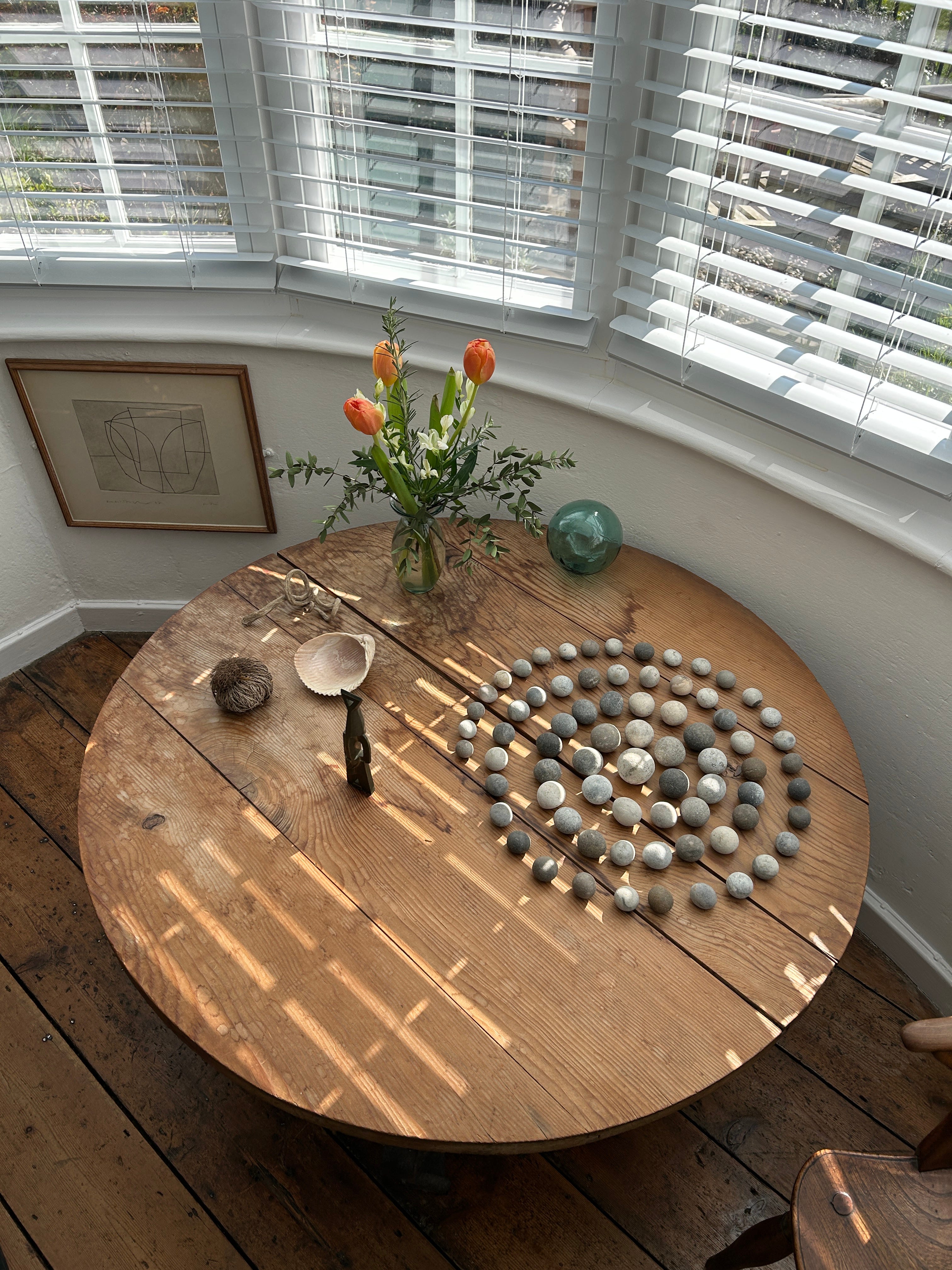
Inside, the house is full of carefully arranged pieces of art, sculpture, textiles, and natural objects. The sitting room, the first room on the visit, is immediately inviting, and visitors are allowed to sit in any of the chairs. All pieces of art are in their original state, so nothing is behind glass or an off-limits rope, nor labeled. The attendant told us Jim Ede was extremely particular about how things were arranged. Everything has its proper and thought-out place, with careful attention paid to natural light, sitting views, and relation to other objects around. The first place I sat was in an old wooden chair that looked to the window and over a coffee table with some rocks arranged in a gradient, a bouquet, and some other spherical objects.
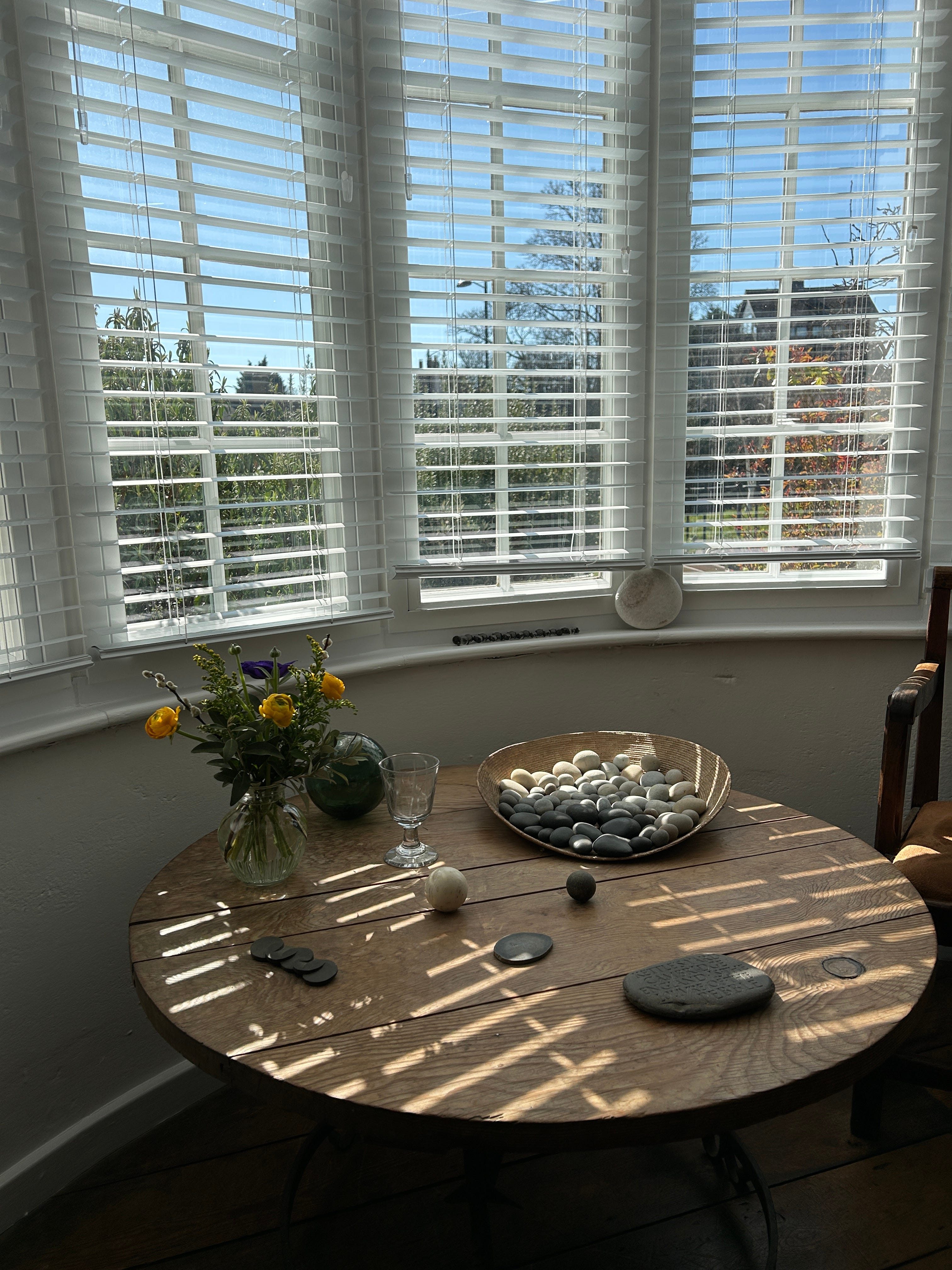
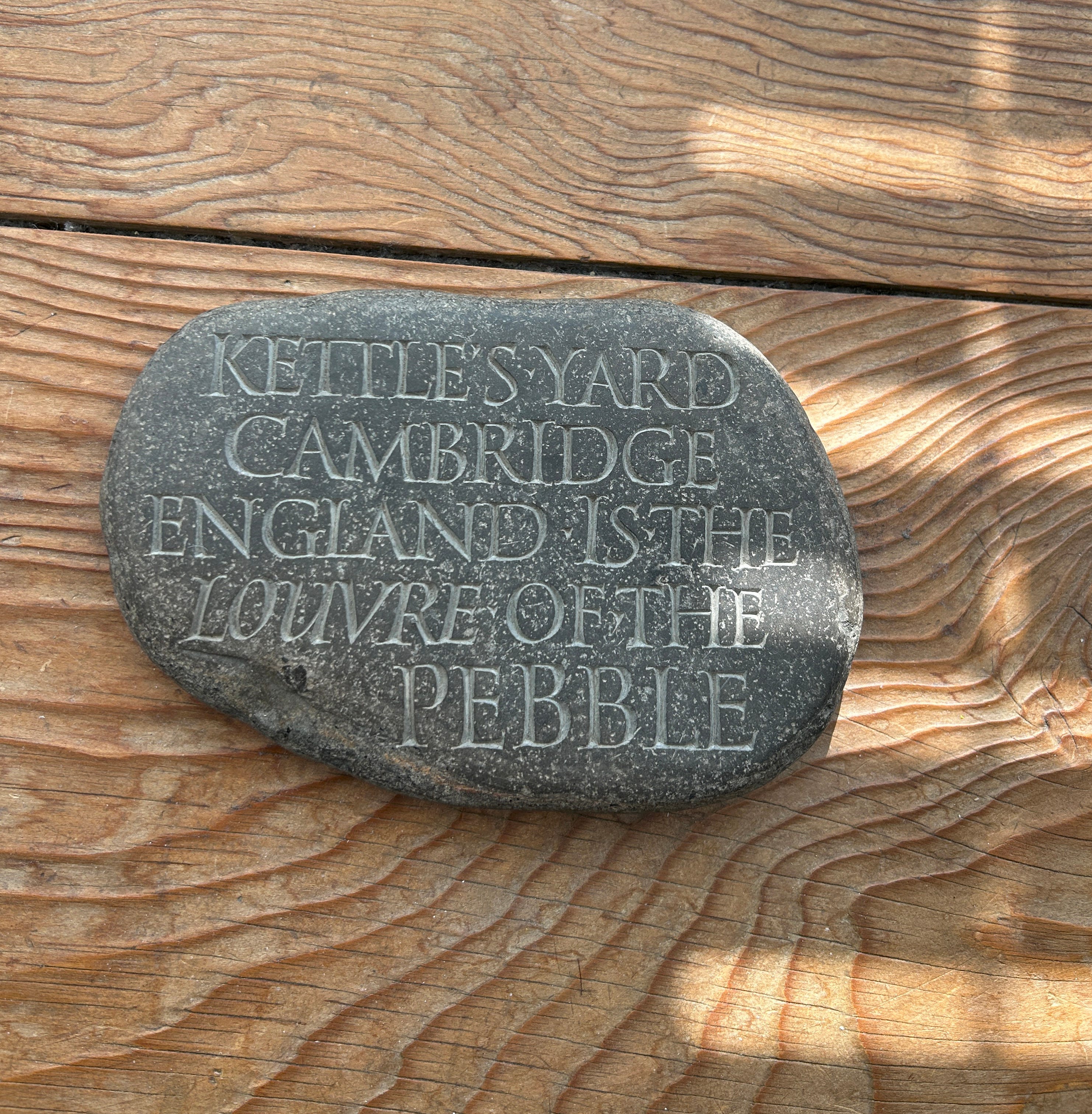
I noticed one of the rocks on the table had an inscription, reading “Kettle’s Yard Cambridge is the Louvre of the pebble” in serif script. I was extremely surprised and delighted by this— what could it mean exactly? How many pebbles were in store? This statement set the tone for the rest of the visit— the closer I looked, the more objects to delight were revealed.
Also in this room was a particularly placed lemon on a tray. The attendant revealed that this is put here every day, as it was how Jim Ede had it. Ede thought it lightened the nearby gray paintings, and recalled a nearby Joan Miro painting that featured a yellow circle.
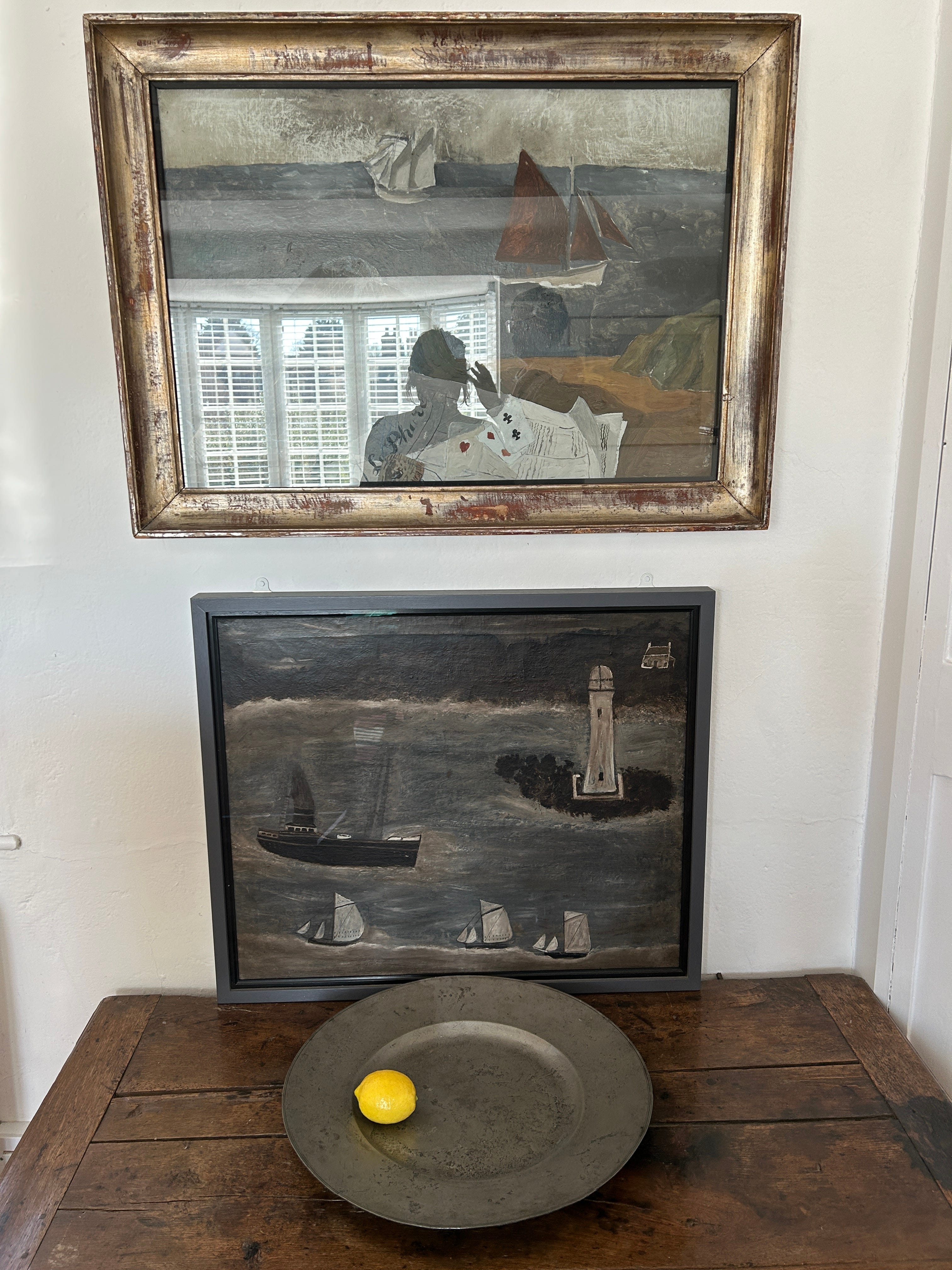
The rest of the home was similar, with curiously but thoughtfully placed items and lovely paintings. I felt lucky to visit while the sun was shining, as Jim Ede paid special attention to the interplay of light in the house. I also liked hearing about how the paintings and sculptures were once considered extremely avant-garde and modern at their time, and the other curators at the Tate rejected Ede’s taste. Today, they seem rather quaint and old fashioned.
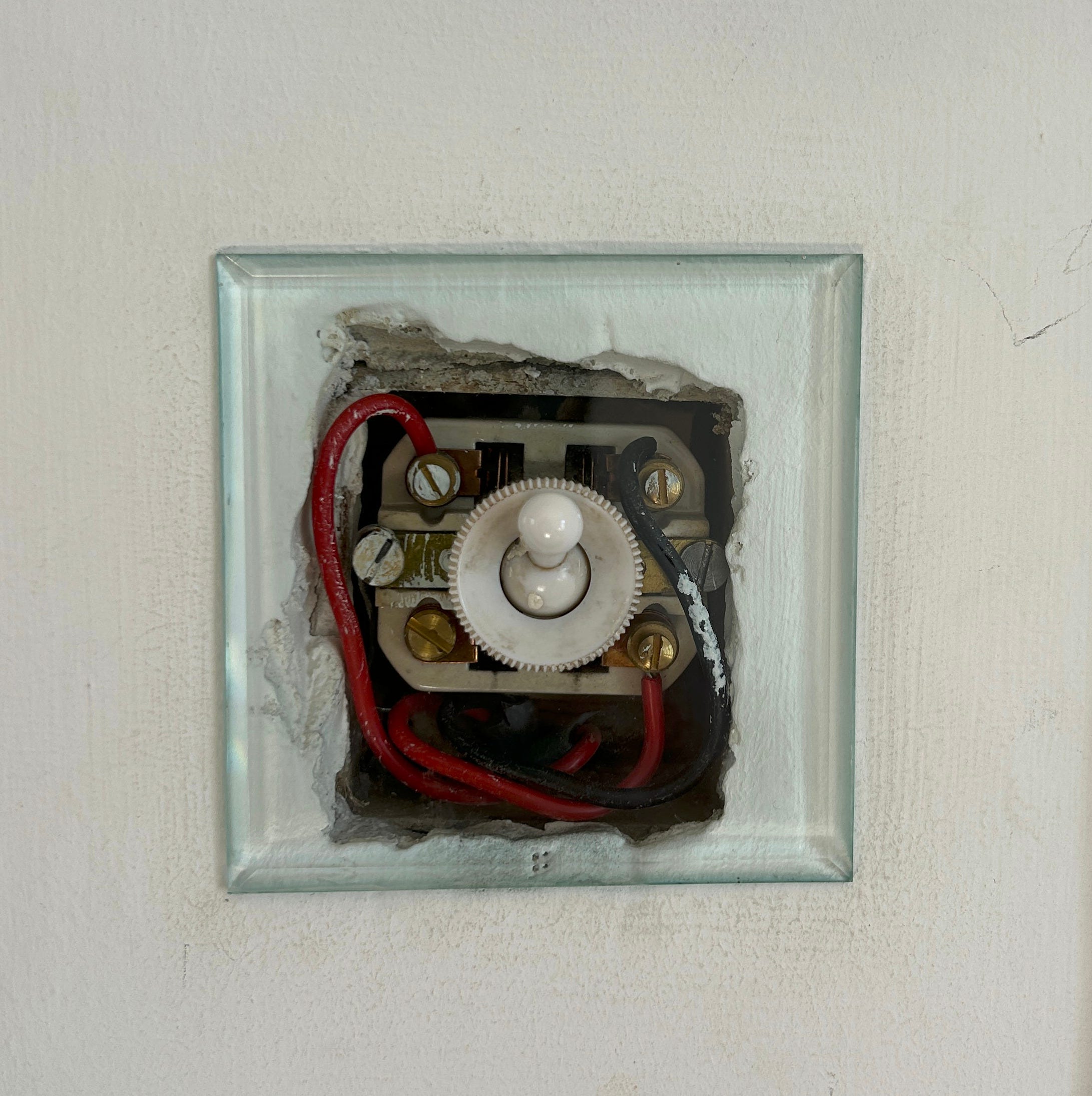
The original section of the house also featured these strange light switch covers, which I noticed and asked the attendant about. He said Jim Ede was a bit of a Luddite, and only agreed to put in electricity in the home after many years. He chose these clear light switch covers himself, which show the wiring normally hidden behind our opaque plastic varieties.
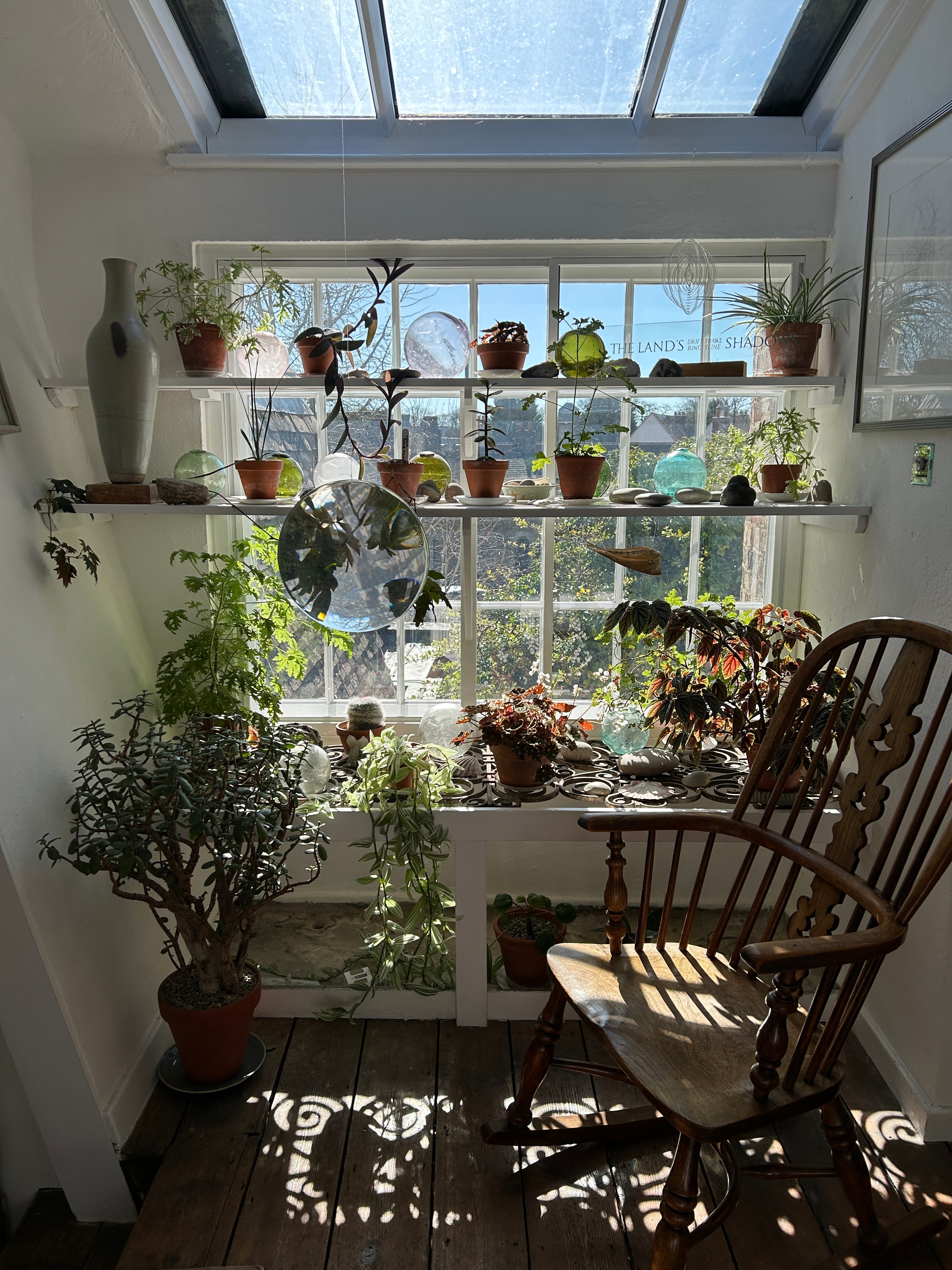
The second half of the house was an addition made in 1970, used by the Edes as more of a library, gallery, and gathering/concert space for their events. This extension was even more full of art than the original, and had a different, more modern charm than the traditional home.
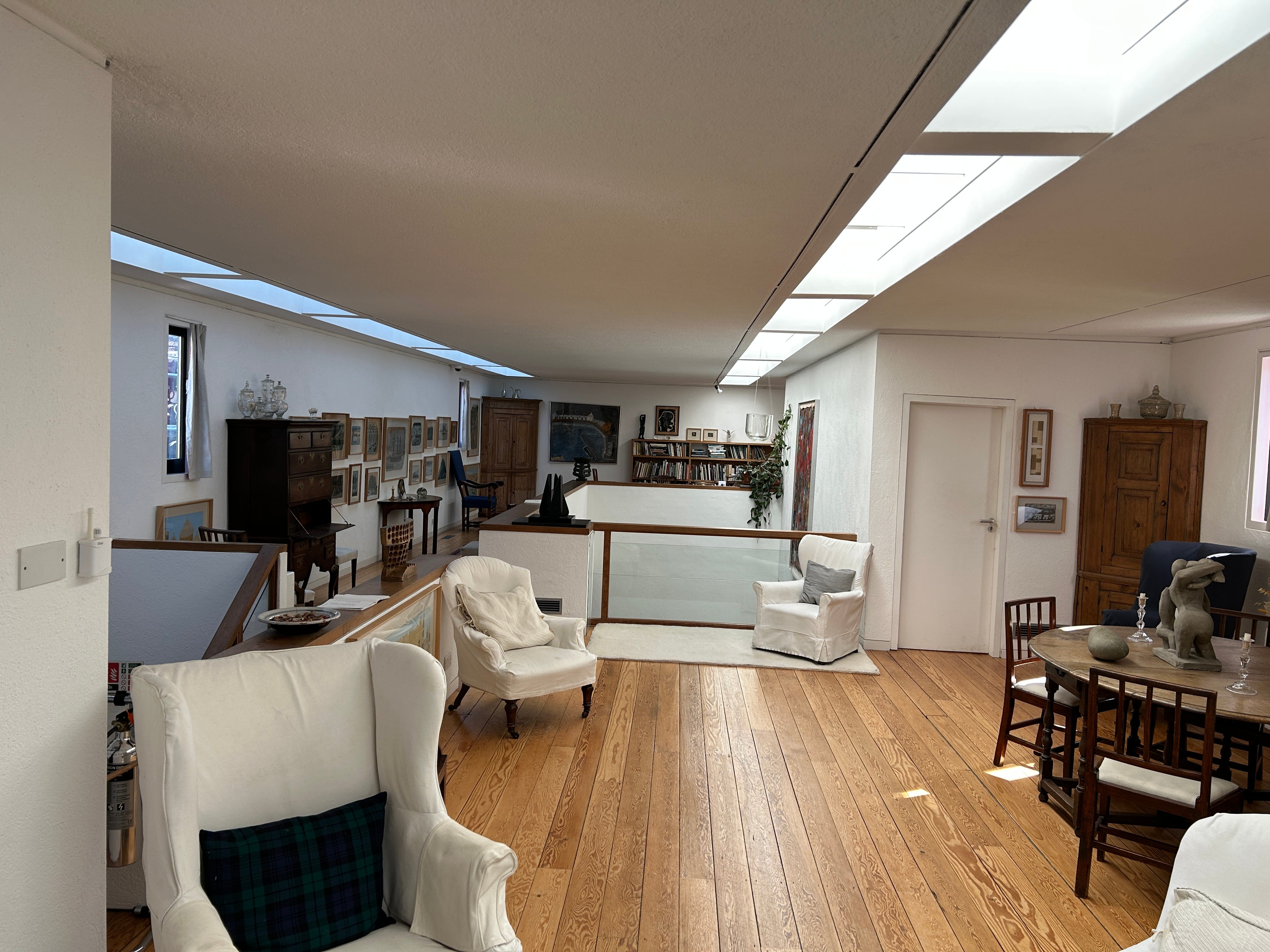
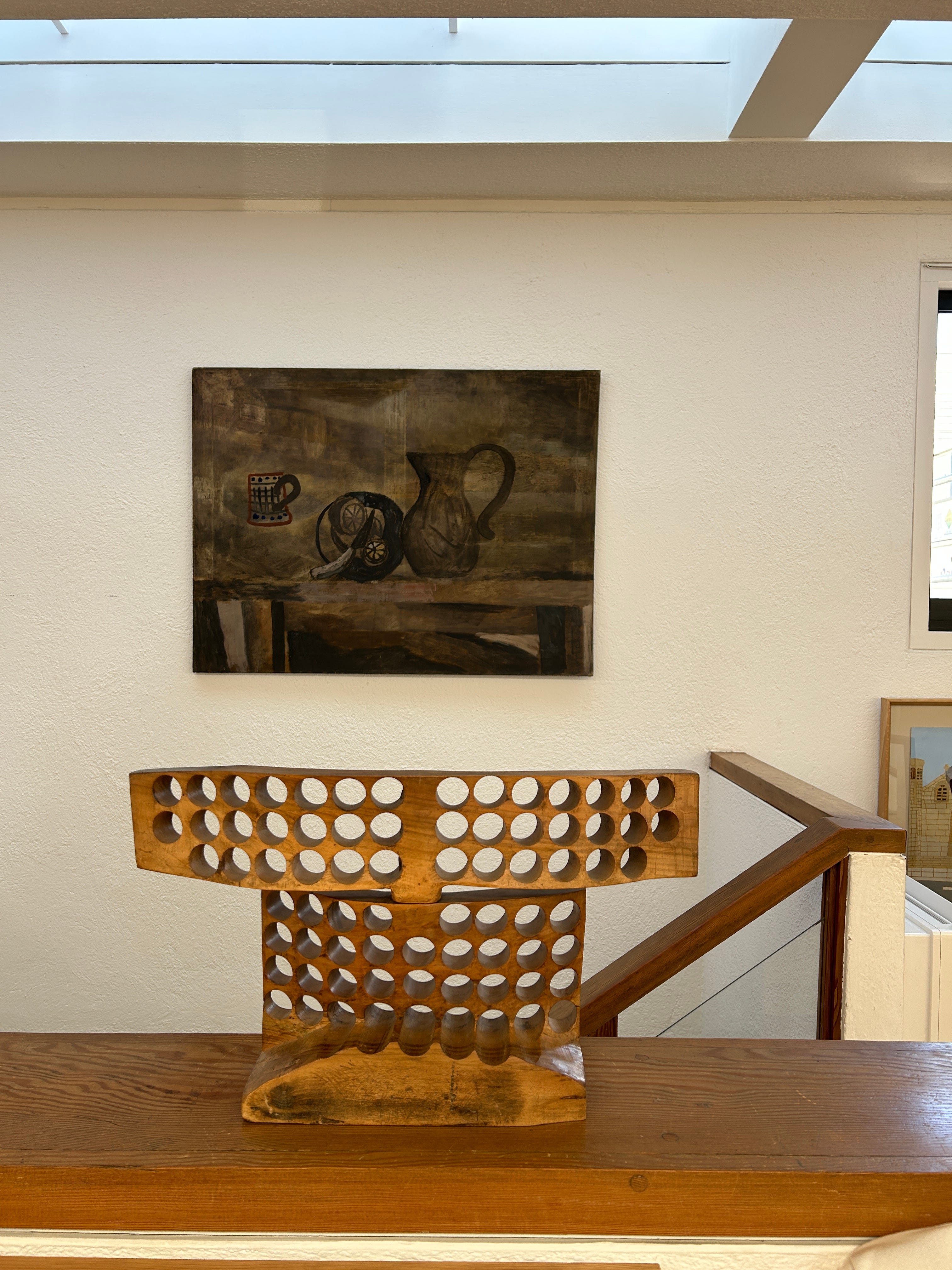
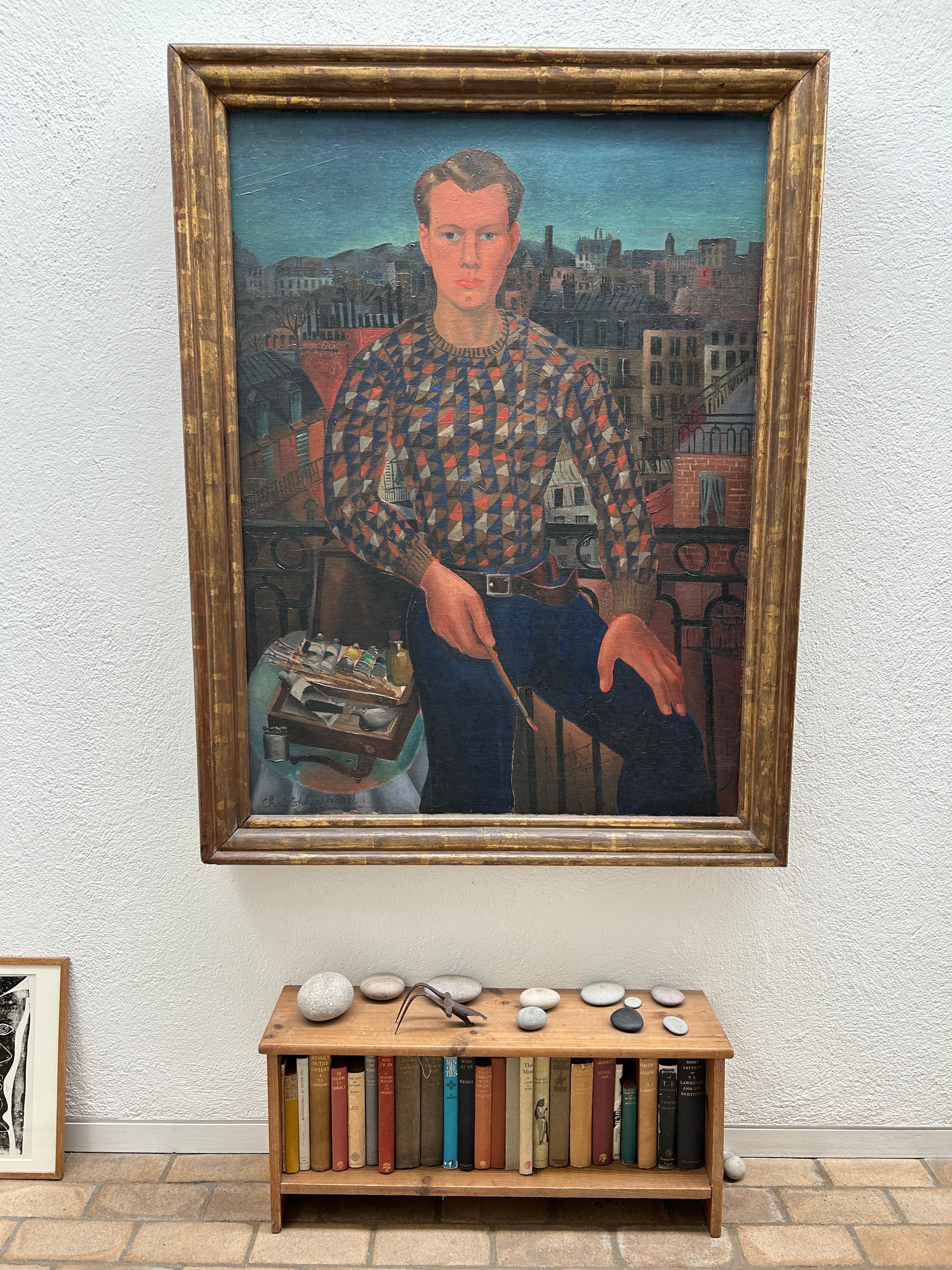
The downstairs of the addition features a space used for concerts and events, and the piece that most caught my eye was this tiny, low bookshelf (with more pebbles) underneath a large painting. In the moment I just thought it was a charming and clever way of storing books, but consultation with the Kettle’s Yard guided app revealed greater curation. The books are entirely that of Jim Ede’s close friend T.E. Lawrence (also known as Lawrence of Arabia). Lawrence’s sexuality has been heavily speculated on, and today many consider him to have been gay. The museum guide points out that Ede placed this collection of books underneath a self-portrait by Christopher Wood, who was known to have relationships with men and women during his lifetime. As the museum guide writes, “all artworks and objects in the house were carefully curated by Ede to be in conversation with one another”— even if it is not immediately apparent to our eyes.
While we were reflecting on the visit, my dad commented that it was amazing for Jim Ede to have such an artistic legacy without being an artist himself— just by having good taste and a desire to curate.
Like seemingly much of the world, I have been thinking lots about AI, especially AI and art. To the best of my understanding, AI creates images and text by identifying patterns in existing work and then imitating those patterns. Some people are excited at this prospect of being able to “create” “art” with these new programs, and think AI generated visuals and text are just as valuable and worth looking at as human-created ones— or that the time and money saved to create them make it worth it. I’m not really interested in writing at length about the complete moral vacuity of this type of opinion, plus many others have written about it with more thoughtfulness (and less acerbity1) than I ever could.
However, my point is, I think one only needs to look to Kettle’s Yard for evidence in favor of the human touch in art and curation. Sure, a machine could identify that there is a yellow circle in a painting by Joan Miro, and that the pixels created by a nearby lemon are somewhat similar. Perhaps it could suggest placing another sculpture or flower with yellow in it nearby. But to choose the lemon! And to place it, off-centered, on a beloved serving dish! And to see the lemon, some sixty years later, and know that a man took the time to regularly acquire lemons, because he thought they made his home a more beautiful place. I want to live in a world where all places, including, frankly, the internet, are full of beautiful things made by nature and by my friends and by people I admire. For now, I’ll just have to settle for my house, inspired by Jim and Helen Ede.
Thanks for reading. I’ll see you somewhere next week.
I personally would rather have my descendants be able to see a glacier or taste chocolate than have a generated Studio Ghibli-"style" PNG of me or some hideous GIF of a hamster lifting weights or something, but I suppose we all have our priorities.
You really captured the creative spirit and deeply human care expressed in Kettle's Yard -- simply beautiful.